DEPTH PSYCHOTHERAPY • WHEAT RIDGE & ONLINE IN COLORADO
Jungian-Oriented Therapy & Dreamwork
“Soul doesn’t pour into life automatically, it requires our skill and our attention.”
Thomas Moore
What is
Jungian-Oriented Therapy?
The style of therapy I practice is a form of psychodynamic depth psychotherapy rooted in the work of C. G. Jung and those who followed him, including James Hillman, Marion Woodman, Marie-Louise von Franz, and Thomas Moore.
At the heart of this work is a deep regard for soul: for the direction of the psyche, for symbolic life, and for the possibility that symptoms, recurring patterns, and periods of suffering may point to something not yet fully lived.
This work is highly relational. The quality of the relationship between therapist and client is not incidental to the work, rather it is integral to the work itself. Wellness can easily be turned into a commodity; something to buy, optimize, repackage, or discard.
In an age when it is increasingly tempting to outsource reflection to artificial intelligence or to approach the psyche as though it were a machine to be diagnosed and tuned, there is a risk of losing some of the very things that allow a person to heal: sustained attention, human presence, relationship, imagination, and the experience of being deeply witnessed.
For much of human history, suffering and transition were held within webs of relationship. Elders, extended family, spiritual traditions, and community helped witness grief, initiation, uncertainty, and new beginnings. Today, many of these experiences are increasingly digitized, medicalized, or flattened into problems to be solved as efficiently as possible.
Depth psychotherapy offers another way of approaching these. We make room for ambiguity, for dreams and images, for the body, for contradiction, and for experiences that cannot immediately be explained. Returning to a therapeutic model rooted in care for the soul may itself be a radical act in a culture increasingly uncomfortable with uncertainty, mystery, and the strange pull of numinous experience.
A Jungian approach might be for you if…
-
You're moving through a major life transition
Jungian-oriented therapy can help you discover meaning in periods of tremendous change. When we are visited by loss, career shifts, parenthood, divorce, or an identity transition these are all opportunities to discover what your psyche may be asking of you.
-
You're feeling "stuck," even if life looks good on the outside
If your life appears functional and yet something in you feels flat, restless, or cut off, depth psychotherapy offers a space to explore the unconscious patterns, emotions, and longings humming beneath the surface of your consciousness.
-
You find yourself repeating old patterns.
Recurring relationship struggles, self-sabotage, or familiar emotional loops may point to deeper material asking for attention. Jungian therapy helps bring these patterns into awareness.
-
You’re curious about dreams, symbols, or your inner life.
Dream work, active imagination, and symbolic inquiry can offer another language for understanding yourself. This approach welcomes the imagination as part of the therapeutic process.
-
You’re searching for meaning, purpose, or a more soulful life.
When symptom relief is not the whole story, depth-oriented therapy can support questions of purpose, identity, spirituality, and the deeper shape your life wants to take.
-
You want a deeper relationship with yourself.
Jungian psychotherapy invites a more reflective and compassionate relationship with your own psyche. This approach honors complexity, shadow, and the possibility of inner change that leads to organic outer change.
Some elements of this style of therapy include:
-
Image
Images are inroads into our unconscious. We find images make themselves known through dreams, synchronicities, active imagination, fantasies, and fears. Rather than translating or interpreting images, we amplify them and allow them to become visitors into our waking world.
-

Symptom
Archetypal psychologist James Hillman said that that our symptoms lead us to our soul. Rather than trying to eradicate symptoms, we see them as messengers trying to awaken you to an unconscious part of yourself.
-
Story
We explore the personal, familial, religious and cultural stories that have shaped your life. When appropriate, we may also incorporate myth, fairy tales or legends to amplify the themes making themselves known in your own narrative.
-
Body
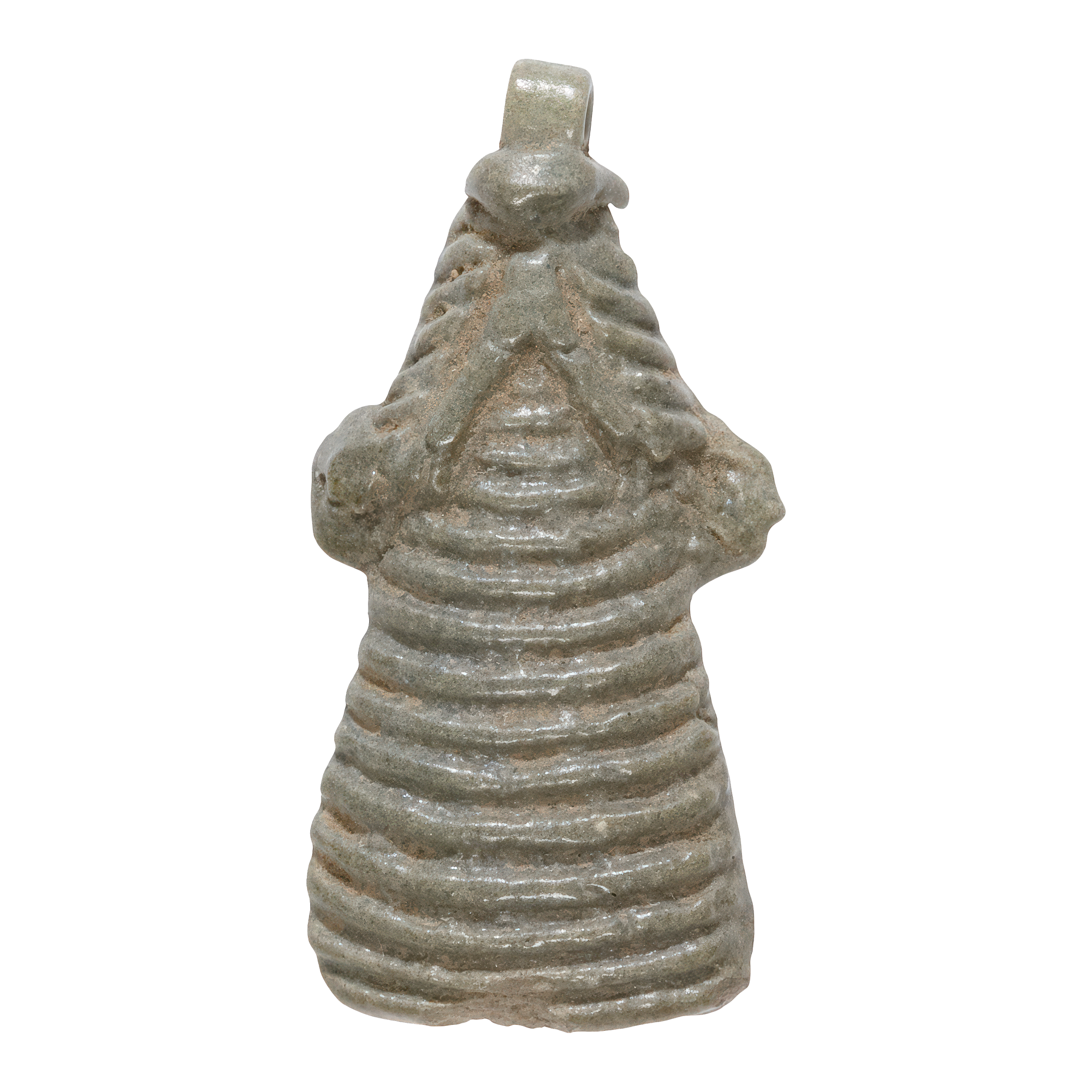
The body is our entryway into the unconscious. It cannot deceive us in the way our minds do. For those who have lived for decades in their minds, a somatic approach to therapy can be a terrifying prospect, an emotional homecoming or something altogether novel.
Jungian Dreamwork in Psychotherapy
Dreams, symbols, and the imagination offer a pathway into aspects of ourselves that may remain outside conscious awareness. Carl Jung understood dreams as having a compensatory and self-regulating function in our psyches, often revealing perspectives that our normal way of understanding a problem has overlooked.
Jungian Dreamwork and engaging with symbols go beyond what many will think of as simple interpretation (haven’t we all looked up that strange animal that’s crossed our path to see what message it might hold for us?). Working in this way allows the unconscious material to become part of the therapeutic conversation. This way of working with the unconscious allows us to understand ourselves in ways that are difficult to reach through conventional forms of problem solving.
A therapy led entirely by what the ego has already decided is “the problem” may sometimes circle the same familiar territory. Jungian and depth psychotherapy invite us to listen for what else the psyche may be communicating. Attending to dreams and symbolic material can open the work toward meanings and possibilities that have not yet become fully conscious.
Dreamwork & The Symbolic Life
Frequently Asked Questions
-
Jungian therapy is a form of depth psychotherapy that pays attention to both conscious experience and the parts of psychological life that may be outside our immediate awareness.
Rather than focusing only on symptom reduction or changing unwanted thoughts and behaviors, we may also become curious about dreams, recurring patterns, relationships, images, bodily experiences, and the meanings that accompany periods of suffering or transition.
This does not mean that practical concerns are ignored. We can work with what is happening in your life now while also asking what may be taking shape beneath the surface.
-
Not at all.
You do not need to have read Jung, understand archetypes, remember your dreams, or consider yourself particularly spiritual or psychologically minded. Jungian ideas inform how I listen and how I understand the therapeutic process, but therapy begins with your actual experience.
-
No. Dreams can be a rich part of Jungian psychotherapy, but they are only one way unconscious material may enter the work.
We may also pay attention to recurring relationship patterns, bodily sensations, emotional reactions, memories, fantasies, images, symptoms, creative material, or experiences that seem to carry unusual intensity or meaning.
If dreams do arise, we can explore them together without needing to arrive at one definitive interpretation.
People also find that once they begin taking their unconscious lives seriously, their psyche has a way of moving more into their awareness. It’s not uncommon for people to begin remembering their dreams.
-
Sessions are conversational and relational rather than highly scripted.
We may begin with what is most alive for you that day and allow the conversation to move between present-day concerns and deeper patterns that emerge over time. Depending on what arises, our work might include reflection, dream work, symbolic exploration, attention to the body, imagination, relationship dynamics, or simply staying with an experience long enough for something previously unseen to become clearer.
There is room for both practical reality and the more mysterious dimensions of psychological life.
-
Yes. People do not need to arrive with an explicitly existential or spiritual concern to engage in depth psychotherapy.
Anxiety, low mood, relationship patterns, grief, identity changes, creative blocks, life transitions, and a persistent sense of being stuck can all become part of the work.
Rather than treating symptoms as meaningless problems to eliminate, Jungian-oriented therapy may also ask what they are connected to and what they reveal about the larger pattern of a person’s life.
-
Yes. I offer Jungian-oriented and depth psychotherapy for adults in the Denver area (my office is in Wheat Ridge, very close to the West Highlands), as well as telehealth for clients located in Colorado.
My approach integrates Jungian and psychodynamic depth psychology with dream work, symbolic inquiry, relational psychotherapy, and attention to the body.
-
Depth-oriented therapy is the broader category; Jungian therapy is one tradition within it.
Depth psychology begins with the idea that we are not entirely transparent to ourselves. Our lives are influenced by unconscious patterns, emotions, memories, relationships, images, bodily experiences, and meanings that may not be immediately available to conscious awareness.
My graduate training is in this tradition. I hold a master’s degree in Counseling Psychology with an emphasis in depth psychotherapy from Pacifica Graduate Institute, where my training was grounded in psychodynamic and Jungian approaches to the psyche.
Jungian therapy is a particular depth-oriented approach influenced by the work of C. G. Jung and those who developed his ideas further. It places particular emphasis on dreams, symbols, imagination, archetypal patterns, the development of the personality over time, and the psyche’s movement toward greater wholeness.
I describe my work as both Jungian-oriented and depth-oriented psychotherapy because Jungian psychology deeply informs the way I practice, while my approach also draws from psychodynamic, relational, and somatic traditions.
-
No. I am a psychotherapist whose work is deeply informed by Jungian and depth psychology, but I am not a certified Jungian analyst.
If you are specifically seeking traditional Jungian analysis, I encourage you to look for a credentialed Jungian analyst through an established analytic institute or professional directory.
My own work is best described as Jungian-oriented, depth-oriented psychotherapy, integrating Jungian thought with psychodynamic, relational, and somatic approaches.
Is a Depth-Oriented Approach Right for You?
I offer complimentary 20-minute consultations so we can chat, explore what you’re hoping for, and see if working together feels like a good fit. If I can’t help you, I’ll help you find someone who is.